
How to hire a crawl space encapsulation contractor in Raleigh
This page is about hiring, not about the service itself. Encapsulation quotes in Raleigh vary enormously for work described in identical words, and North Carolina has two quirks — a $40,000 licensing threshold and a codified crawl space standard — that between them decide most of what you need to check.
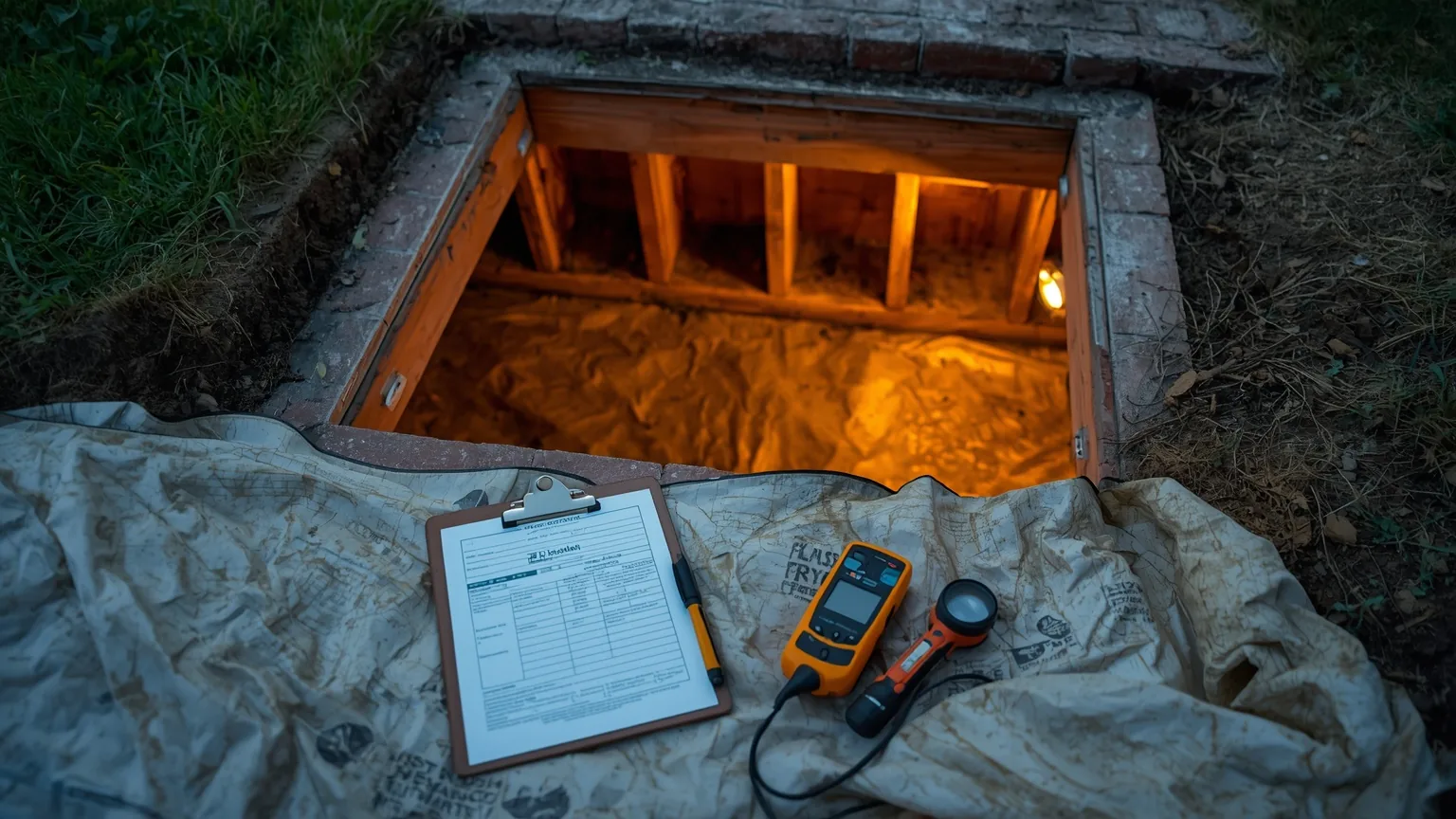
Who handles crawl space encapsulation contractor in Raleigh, NC?
Raleigh Crawl Space Solutions connects Raleigh homeowners with independent crawl space encapsulation contractors and can arrange an on-site evaluation with moisture readings and a written, itemized scope you can compare against NC Residential Code R409. Call (919) 746-7020 to arrange an evaluation.
What 'licensed' actually means in North Carolina
This surprises most homeowners. North Carolina requires a General Contractor license from the NC Licensing Board for General Contractors only where the cost of the undertaking reaches $40,000 or more — a threshold raised from $30,000 on 1 October 2023.
Most crawl space encapsulation projects come in below that. A contractor can therefore perform your encapsulation entirely legally without holding a GC license, and describing themselves as licensed may refer to something else entirely, or to nothing in particular.
So the useful question is not "are you licensed?" but "licensed for what, and by whom?" Electrical work for a dehumidifier circuit and mechanical work for a supply duct fall under separate trade licensing regardless of the project's size. If your job does cross $40,000 — which happens once structural repair or extensive drainage is involved — a GC license becomes mandatory, and unlicensed contracting at or above that figure is a Class 2 misdemeanor under state law. You can verify any GC license directly with the NCLBGC.
Use R409 as your screening tool
Because North Carolina writes closed crawl spaces into code, you can check a proposal against a published standard rather than against a competitor's marketing. Three questions separate a complete scope from a liner sale faster than anything else.
Ask how the wall liner terminates at the top. The correct answer names the 3-inch termite inspection gap required by R409.2.2.1. A contractor who describes running liner right up to the sill plate — or who treats the gap as an optional detail — is either unfamiliar with the code that governs their trade in this state, or planning to install a defect.
Ask what the drying method is and how it is sized. R409.5 accepts a dehumidifier of at least 15 pints per day, a conditioned supply at 1 CFM per 30 square feet, or an exhaust fan at 1 CFM per 50 square feet. A quote that seals the space and specifies none of these is incomplete on its face.
Ask who pulls the permit. Converting vented to closed requires one regardless of cost, per the NC Office of State Fire Marshal. "You don't need a permit for this" is a factual error about North Carolina, and it tells you what else may be getting skipped.
What a real evaluation should produce
An estimate written without anyone going under the house is not an estimate. The visit should produce moisture content readings on joists, beams and subfloor at more than one location, an identification of where water enters, and an assessment of framing that is already damaged.
You should receive a written scope in a sequence — water source addressed, structural repair if needed, then sealing and humidity control — rather than a lump sum against the word "encapsulation".
If a contractor recommends encapsulation without measuring anything, they have not diagnosed your crawl space. They have quoted their standard product.
Comparing estimates that are not comparable
Two encapsulation quotes rarely describe the same work, and the gap is usually hidden in what is excluded rather than what is listed. Line them up against each other on these points.
- Is drainage included or excluded? The single largest source of price difference. A quote that assumes no water problem will always look cheaper than one that solves an existing one.
- Is old insulation removal and disposal in the price? Wet fiberglass removal is real labor and real disposal cost, and it is a common exclusion.
- What is the liner spec, and how far up the walls? 6-mil is the code minimum over exposed earth, with 12-inch laps and at least 6 inches up the walls. Heavier liner and higher wall coverage are legitimate upgrades — but they should be stated.
- How are seams, piers and penetrations sealed? A liner is only as good as its joints. Piers and plumbing penetrations are where a cheap installation shows first.
- Which drying method, and what capacity? A named unit with a rated pints-per-day figure, and a permanent condensate route — not "a dehumidifier".
- Are permits and structural repair inside or outside the number? Both are common exclusions, and both can move a project materially.
Proposals worth walking away from
A quote produced over the phone, or from photographs, without anyone entering the crawl space.
A recommendation to encapsulate a crawl space that is visibly holding water, with no drainage in the scope. That is not a cheaper version of the correct job — it is a different job that leaves the original problem running underneath a sheet of plastic.
Pressure tactics around a price that expires today. Crawl space moisture has been developing for years; it does not become urgent at 5pm.
Any claim that the work needs no permit in North Carolina, or that the termite inspection gap is unnecessary. Both are checkable, and both being wrong tells you enough.
A single bundled figure with no itemisation, offered alongside a refusal to break it down.
How to prepare for the visit
Clear access to the crawl space hatch, and know where it is — an interior access panel is sometimes inside a closet under the stairs.
Write down what you have actually observed and when: the month the smell appears, whether water shows up after rain or in still, humid weather, when the floors started feeling different. The seasonal pattern is diagnostic. Water after heavy rain points at drainage and grading; damp that peaks in still August heat points at condensation.
Have any past work to hand — a previous barrier, a sump installation, drainage work by a landscaper. Knowing what is already down there changes the scope and can save you paying for it twice.
Verifying a contractor in Wake County
A General Contractor license can be checked directly with the NC Licensing Board for General Contractors, and it is worth doing even when the project sits below the $40,000 threshold that makes one mandatory — because it tells you what the contractor actually holds rather than what the marketing implies.
Permits are the other verifiable item. Work inside the city is permitted through City of Raleigh Development Services; unincorporated Wake County and the surrounding counties issue their own. A contractor who works your area regularly will know which applies to your address without having to look it up.
Crawl Space Encapsulation Contractor questions
Does a crawl space encapsulation contractor need a license in North Carolina?
Only if the cost of the undertaking is $40,000 or more, which is the threshold for requiring a General Contractor license from the NC Licensing Board for General Contractors. Most encapsulation projects fall below that figure and can legally be performed without a GC license. Trade work inside the project — the electrical circuit for a dehumidifier, or mechanical work on a supply duct — falls under its own licensing regardless of project size.
What questions should I ask before hiring?
Four cover most of it. How does the wall liner terminate at the top, and is the 3-inch termite inspection gap being left? What is the drying method and its rated capacity? Who pulls the permit? And is drainage included or excluded? Answers to those four separate a complete scope from a liner sale more reliably than any amount of general reputation checking.
How many quotes should I get?
Two or three is usually enough, provided each one comes from someone who actually went under the house. More quotes from people who never entered the crawl space do not improve the decision. What makes comparison possible is an itemized scope, because a single bundled number cannot be compared with anything.
Is the cheapest encapsulation quote usually a problem?
Not necessarily, but find out what it excludes before deciding. The usual explanations for a materially lower price are that drainage is not in the scope, existing insulation removal is not included, or the liner and drying specification are at the code floor. Any of those may be perfectly appropriate for your house — the point is to know which one you are buying.
Should I use a contractor who offers a lifetime warranty?
Read what it covers and who backs it. Warranties in this trade often cover the liner material rather than the outcome, and they are only as durable as the company issuing them. A warranty is not a substitute for a scope that addresses the water source, and it is worth less than a contractor who diagnosed the problem correctly in the first place.
Related crawl space services
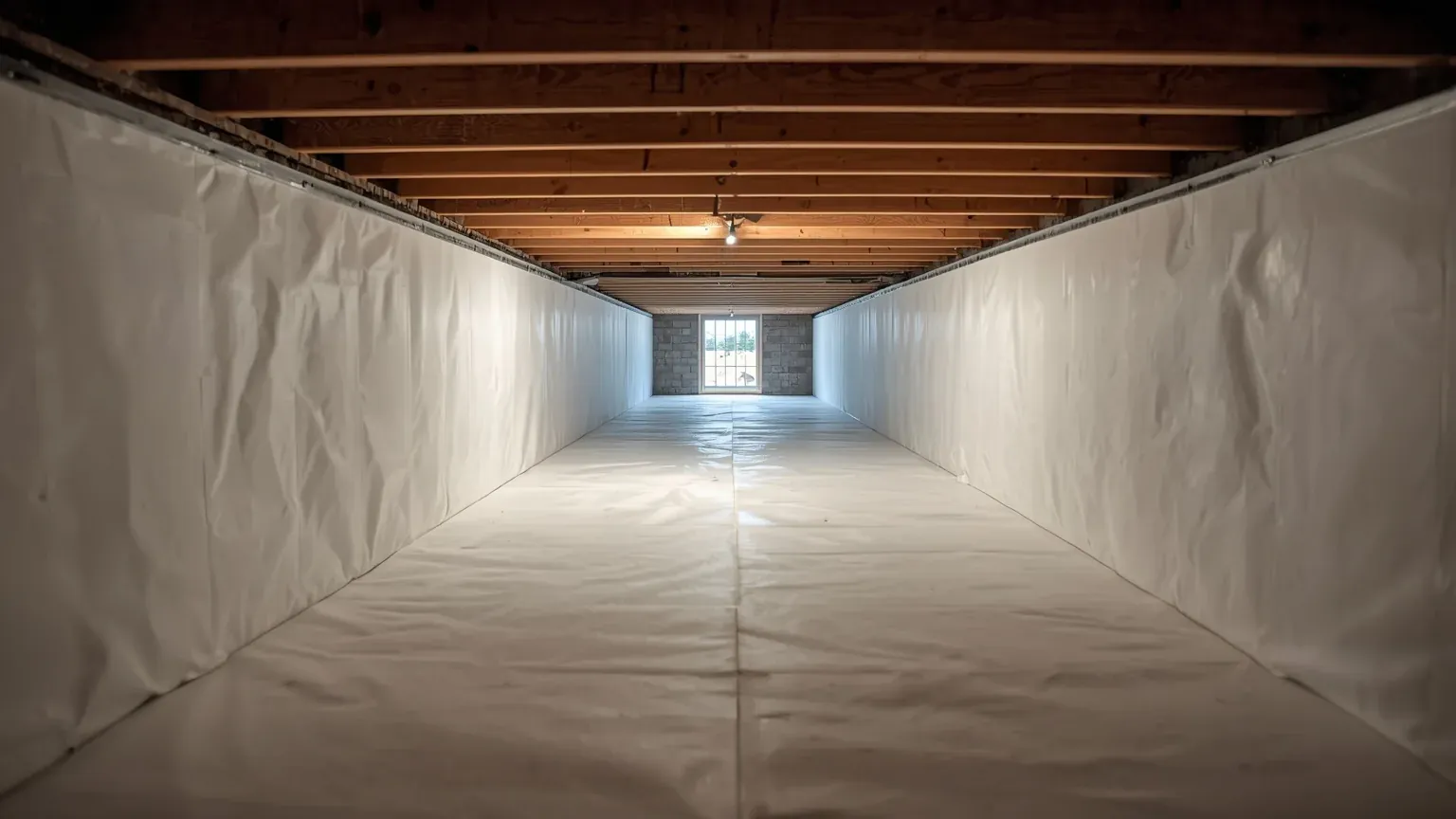
Crawl Space Encapsulation
Sealing the space and controlling what is left — to the NC R409 standard.
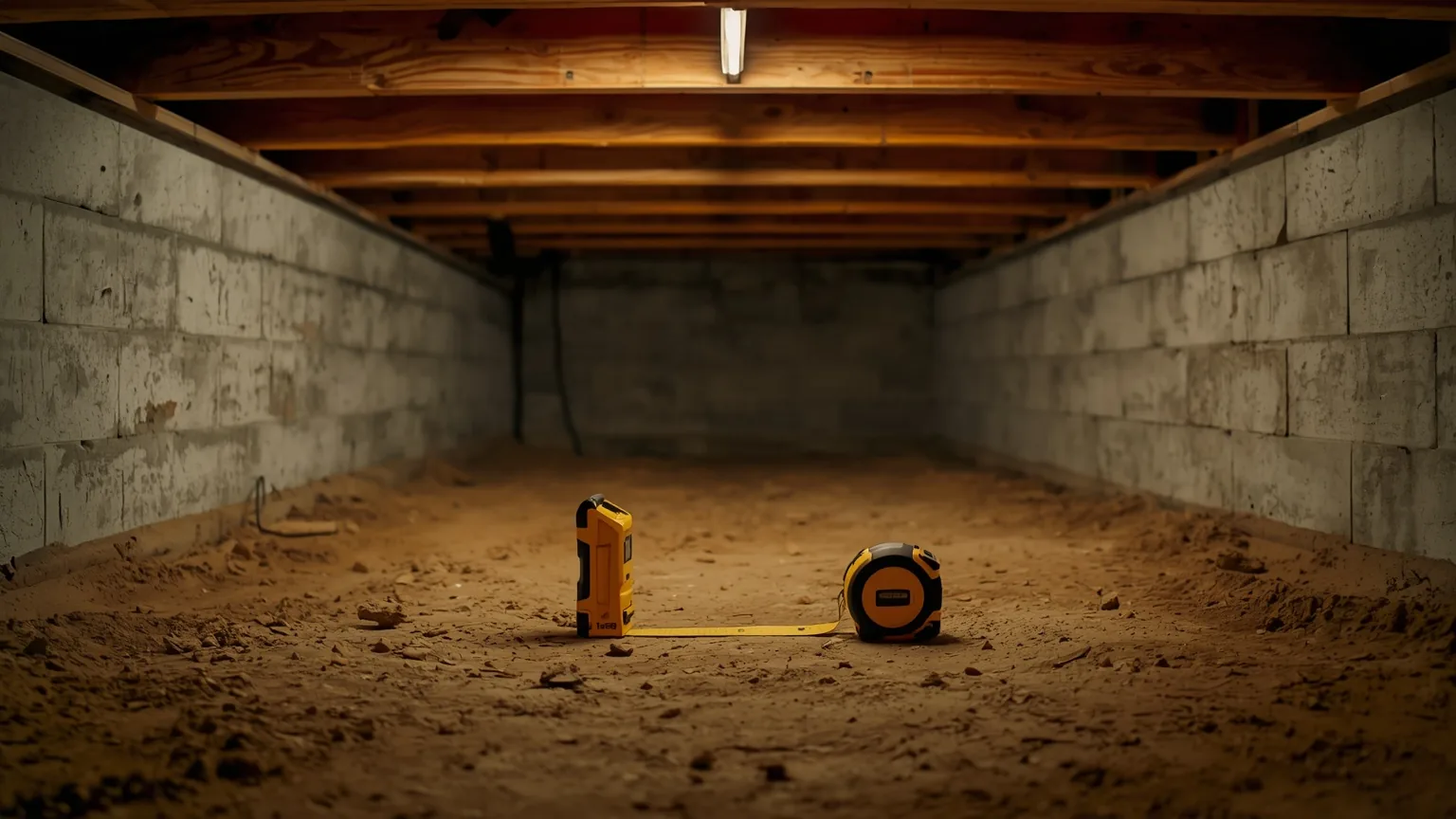
Crawl Space Encapsulation Cost
What moves the number — and how to compare two quotes against NC code.
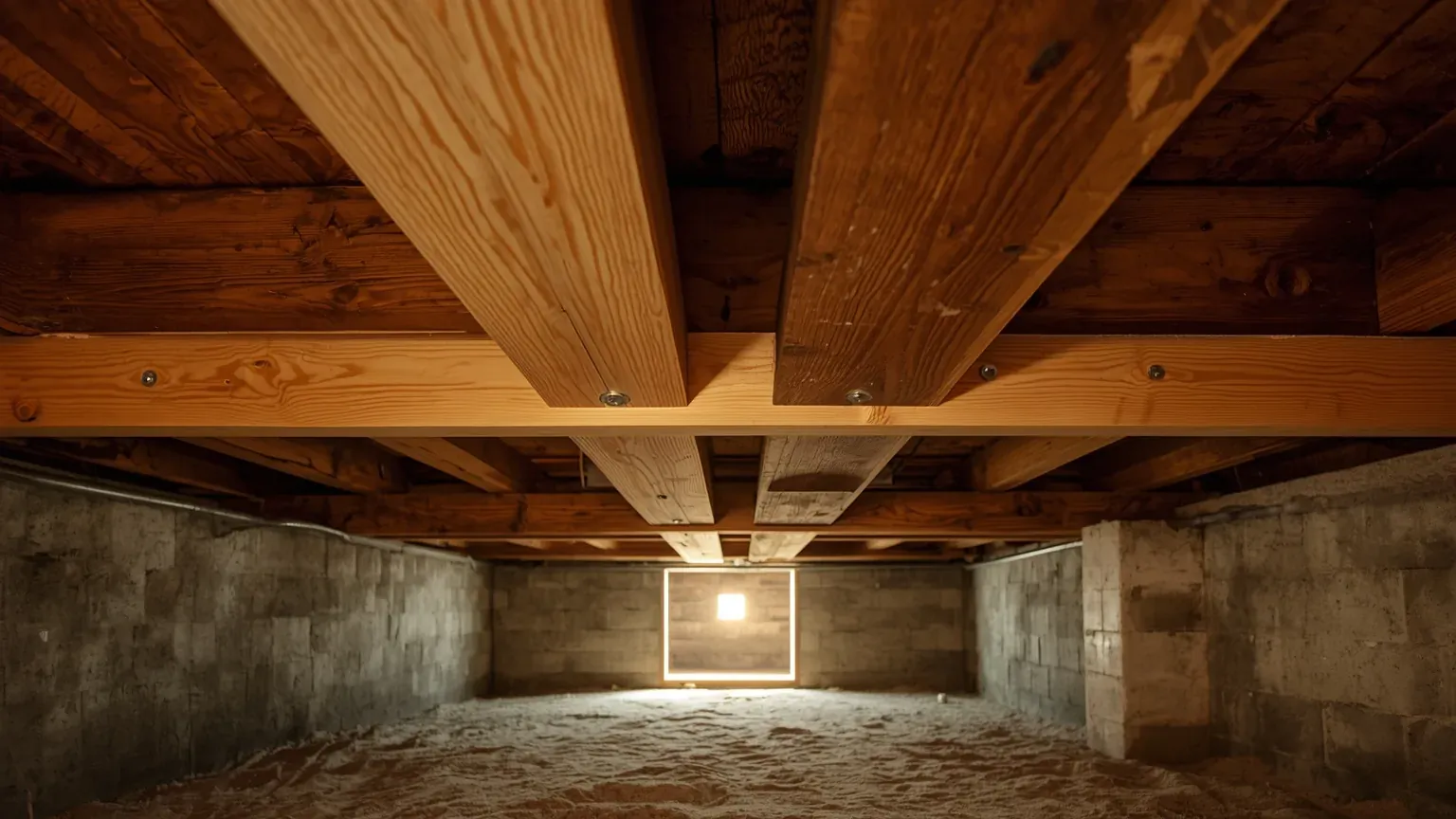
Crawl Space Repair
Damaged joists, failing supports — and why moisture is fixed first.
Crawl Space Waterproofing
Liquid water: finding where it enters before anything gets sealed.
Find out what is actually causing it.
Someone under the house, moisture readings taken, and the scope written down before a price is attached.